
Fix the Foundation of Human Movement
The Phoenix Sinus Tarsi Stent System™ is a minimally invasive, motion-preserving solution designed to internally stabilize recurrent talotarsal joint instability (RTTJD) — a commonly overlooked cause of foot and ankle dysfunction.

Most foot treatments address symptoms.
Not the cause.
Many patients live with chronic foot, ankle, knee, hip, and lower-back problems driven by instability of the talotarsal joint complex — a root cause that often goes unaddressed.
- Overpronation
- Plantar fasciitis
- PTTD
- Bunions
- Flatfoot deformity
- Foot fatigue
- Ankle instability
- Plantar neuropathy
- Morton’s neuroma
Yet RTTJD often remains underdiagnosed. Phoenix was designed to address the problem at its foundation.
How can we help you?
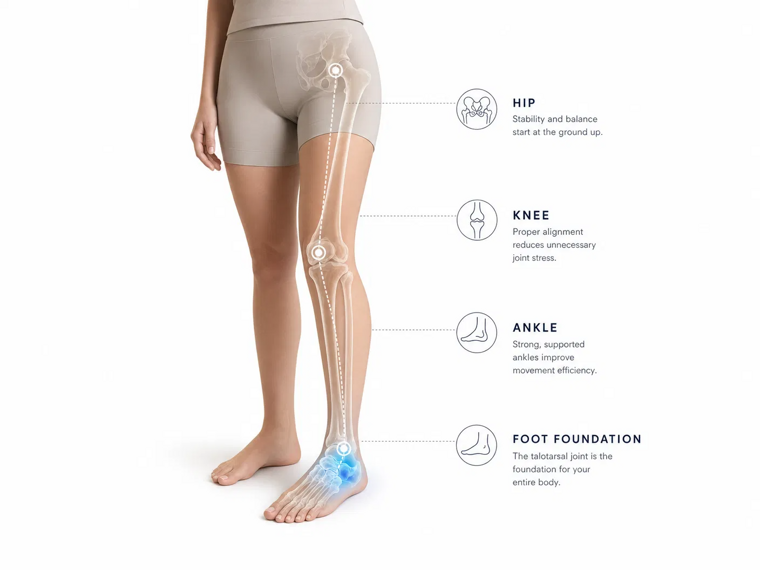
Are your feet affecting the rest of your body?
Learn how instability within the foot may contribute to chronic pain, fatigue, imbalance, and progressive deformity — and what can be done about it.
Explore patient education →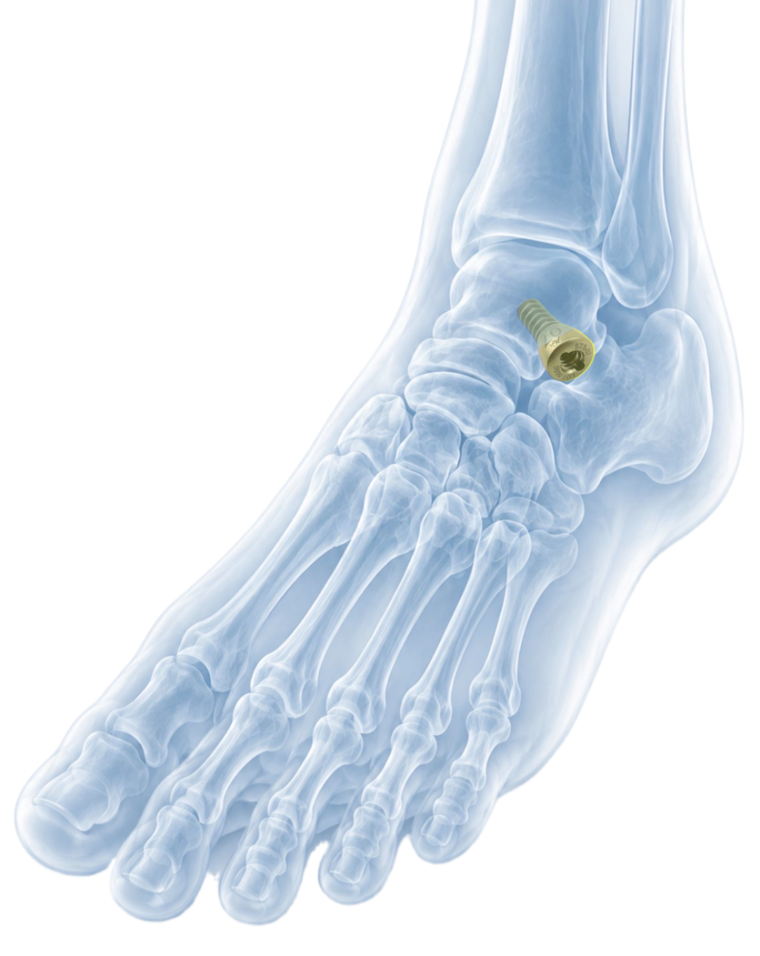
Advancing EOTTS technology
Discover the next-generation Phoenix platform for extra-osseous talotarsal stabilization, clinical evidence, and hands-on training.
View clinical information →Meet the Inventor
Dr. Michael E. Graham, inventor of HyProCure®, HyProCure II®, and Phoenix STS™, shares the vision behind Phoenix and his commitment to advancing foot alignment and stability.
Designed for alignment.
Built for motion preservation.
Minimally Invasive
A small-incision outpatient procedure.
Motion Preserving
Designed to preserve natural joint movement.
Internal Stabilization
Addresses excessive talotarsal instability.
Reversible
Implant removal remains possible if clinically necessary.
See instability differently
RTTJD is often missed during static examination alone. Weight-bearing imaging and dynamic biomechanical evaluation may help identify excessive talotarsal instability and guide treatment decisions.
Treat the cause.
Not just the symptoms.
Discover how the Phoenix platform is advancing the standard of care for talotarsal joint instability.